Camera Vision & Optical Tracking in Neuro-Rehab: Enabling High-Precision Therapy Without Wearables
How markerless AI camera tracking enables seated, wheelchair, and elderly patients to participate in bio-feedback therapy without wearing heavy headsets or sensor straps.
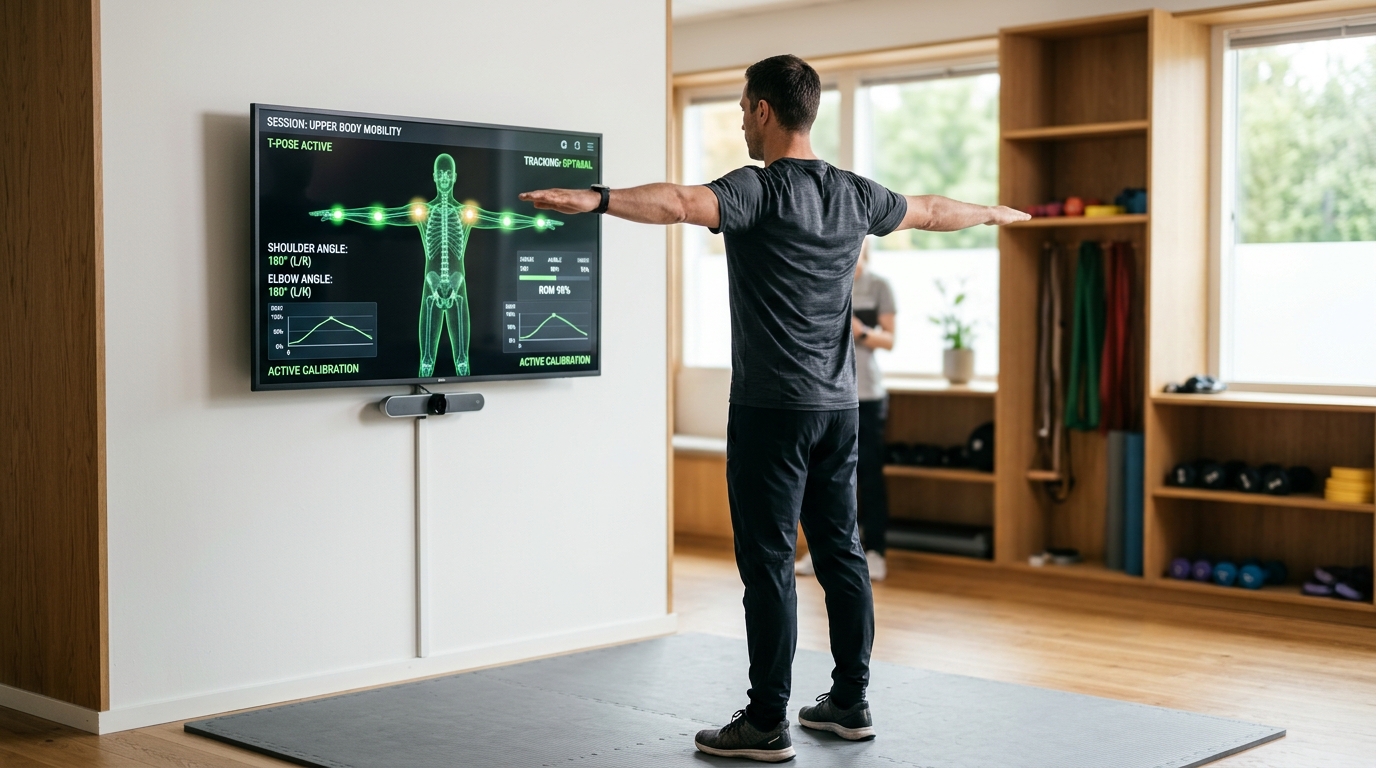
Overcoming the Headset Barrier in Fragile Demographics
While virtual reality headsets provide total optical immersion, certain patient cohorts present contraindications or tactile resistance. Post-acute stroke patients with severe cervical stiffness, elderly individuals prone to claustrophobia, or pediatric patients with sensory processing sensitivities often struggle with wearable head-mounted hardware.
To democratize gamified neuro-rehabilitation across all clinical tiers, Oqulix engineered the Happy Moves Camera Vision system.
Markerless Computer Vision Skeletal Pose Estimation
Happy Moves Camera Vision leverages high-frame-rate optical sensors and real-time deep neural networks to extract a 33-point anatomical skeletal twin:
Adaptability for Seated & Wheelchair Therapy
A cornerstone of the camera-vision architecture is its dynamic normalization engine. Whether a patient is seated in an ergonomic wheelchair, on an examination bench, or standing upright, the system automatically recalibrates its functional workspace envelope. Patients with partial hemiparesis can practice bilateral symmetry exercises, with the software tracking both unaffected and affected limb coordination.
Frictionless Hospital & Outpatient Deployment
Because no physical components touch the patient, camera-vision stations eliminate cross-contamination risks and sterilization delays between patient appointments in busy hospital outpatient departments—allowing healthcare facilities to treat more patients efficiently each day.
Ready to deploy these solutions in your organization?
Speak directly with our healthcare XR, gamification, and enterprise cloud engineering teams.
Related Publications & Technical Insights
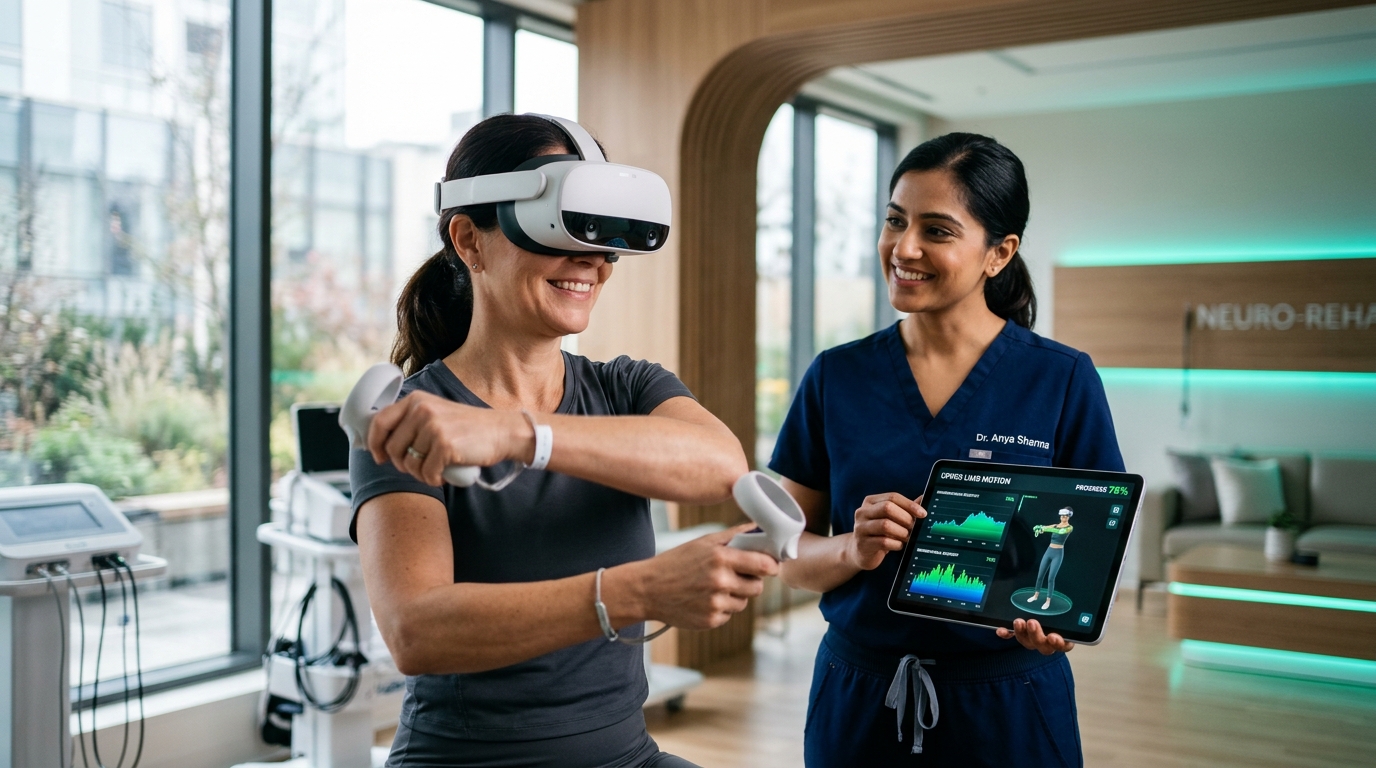
How Virtual Reality Rehabilitation Accelerates Neuroplasticity in Stroke Recovery
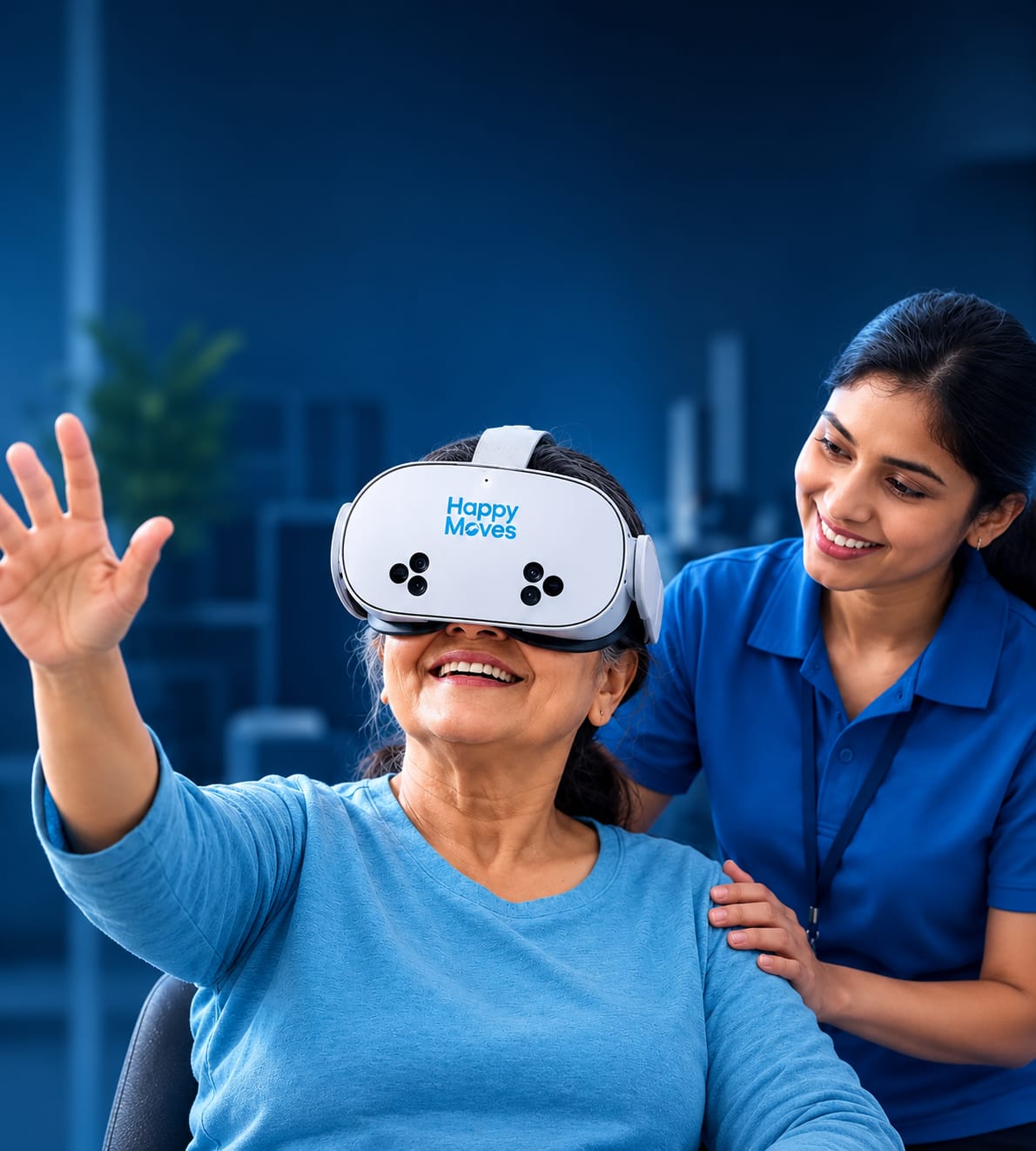
Gamified Physiotherapy vs Traditional Physical Therapy: Clinical Outcomes & Patient Adherence