Operating Theatre 3D Digital Twins: How Spatial Mapping Optimizes Surgical Workflows and Hospital Layouts
Why cutting-edge medical institutions and hospital architects deploy millimeter-accurate 3D spatial twins for surgical suite layout design, equipment orientation, and sterile workflow simulations.
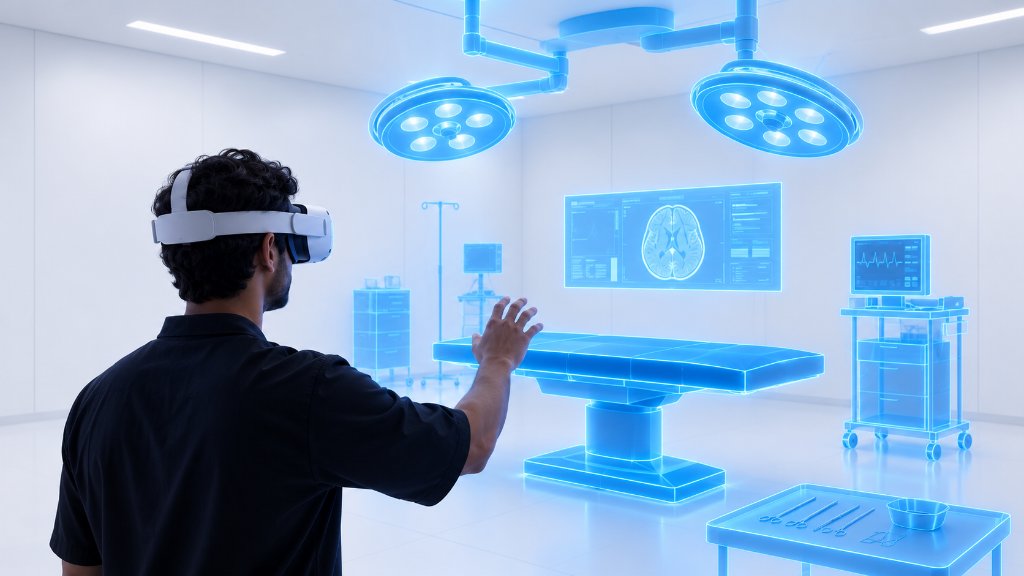
The Critical Geometry of Surgical Environments
The modern Operating Theatre (OT) is among the most technologically dense and sterile physical spaces on earth. An operational surgical bay must seamlessly integrate ceiling-mounted surgical pendants, multi-axis robotic arms, laminar air-flow hoods, anesthesia carts, laparoscopic monitors, and specialized surgical teams—all within strict spatial clearance parameters.
A layout error as minor as a surgical lamp arm colliding with an imaging boom during laparoscopic repositioning can cause catastrophic procedural delays and cost millions in post-construction structural modifications.
High-Precision Millimeter Spatial 3D Capture
Oqulix's Spatial 3D Mapping division bridges the gap between architectural blueprints and surgical reality through sub-millimeter photogrammetry and LiDAR spatial scanning:
Virtual Simulation: Testing Workflows Before Breaking Ground
With the operating theatre digital twin live in interactive VR / WebXR:
Slashing Hospital Construction & Renovation Costs
By resolving spatial collisions virtually in the 3D twin, healthcare systems eliminate costly physical change-orders during construction, cut biomedical integration timelines by up to 40%, and ensure absolute compliance with international NABH and JCI sterile room standards.
Ready to deploy these solutions in your organization?
Speak directly with our healthcare XR, gamification, and enterprise cloud engineering teams.
Related Publications & Technical Insights
How Virtual Reality Rehabilitation Accelerates Neuroplasticity in Stroke Recovery

Gamified Physiotherapy vs Traditional Physical Therapy: Clinical Outcomes & Patient Adherence